
Dr Quan Nguyen
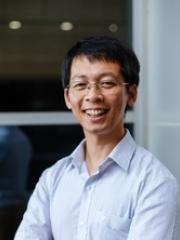
Researcher biography
Dr Quan Nguyen is a Group Leader at the Institute for Molecular Bioscience (IMB), The University of Queensland, where he leads the Genomics and Machine Learning (GML) Laboratory. His research focuses on understanding pathological processes within tissues to identify biomarkers for early diagnosis, patient stratification, and prediction of treatment response. His work integrates statistical machine learning techniques with advanced genomic technologies, combining single-cell and spatiotemporal sequencing data with tissue imaging to uncover causal links between genotypes and phenotypes across biological scales, from single cell, to tissue microenvironment, organ, multi-organ and population level. By studying cell-cell interactions, his research also contributes to the discovery of novel drug targets and improved understanding of drug mechanisms and toxicity. The GML Laboratory also develops spatiotemporal experimental platforms for large-scale biomarker profiling and validation in preclinical models and patient cohorts.
Dr Nguyen completed a PhD in Bioengineering at the University of Queensland in 2013, postdoctoral training in Bioinformatics at RIKEN institute in Japan in 2015, a CSIRO Office of Chief Executive (OCE) Research Fellowship in 2016, an IMB Fellow in 2018, an Australian Research Council DECRA fellowship in 2021, and is a National Health and Medical Research Council leadership fellow. He has authored 86 publications in top-tier journals, like Cell, Nature Genetics, and Nature Method, averaging ~45.5 citations per paper, and led the development of 14 software tools with over 250,000 downloads. His recognised expertise is demonstrated through 14 national/international awards, numerous invited talks (21 international, 42 national), invited grant reviews for funding bodies in nine countries, and active editorial roles for BMC Cancer and Genome Medicine. His commitment to propelling the field forward is evident in leading roles within key consortia and forums and his dedication to organise training workshops and conferences. He has secured over $31 million in grant funding as a chief investigator from national and international funding agencies (e.g., ARC, NHMRC, MRFF, DoD, NCI) and from industry partners, with approximately $11million directly supporting his lab's groundbreaking work.