
Dr Eduardo Albornoz Balmaceda
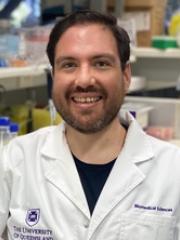
Eduardo completed his PhD studies in October 2018 in collaboration with Prof Matthew Cooper at the Institute for Molecular Biosciences (IMB). He is currently extending his research within the Woodruff Lab which studies Neuroinflammation at the School of Biomedical Sciences. His research focuses on the pharmacological targeting of the innate immune response during neurodegeneration.
Researcher biography
Dr Eduardo Albornoz is a neuroimmunologist whose research focuses on how innate immune mechanisms contribute to neurodegenerative disease. His work investigates how inflammasome and complement pathways are activated by environmental, infectious, and disease-related triggers in conditions such as Parkinson's disease and motor neuron disease.
Dr Albornoz has expertise in neuroscience, immunology, pharmacology, translational drug development, and preclinical disease modelling. His research integrates human microglia, brain organoids, viral infection models, and animal models to understand how neuroinflammation contributes to neuronal injury and disease progression.
He completed his PhD at The University of Queensland, where he contributed to the development of next-generation NLRP3 inflammasome inhibitors and helped validate NLRP3 as a therapeutic target in Parkinson's disease. This work supported translational drug development programs that progressed towards clinical testing.
His current research program focuses on environmental and infectious drivers of neurodegeneration, including pesticides, microplastics, PFAS, SARS-CoV-2, and other neurotropic viruses. A major focus of his work is understanding how multiple environmental, infectious, and proteopathic "hits" interact to amplify chronic neuroinflammation and accelerate neurodegenerative disease progression. His research aims to identify therapeutic strategies targeting innate immune pathways to slow or prevent neurodegeneration.